

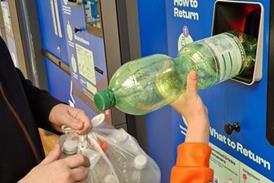












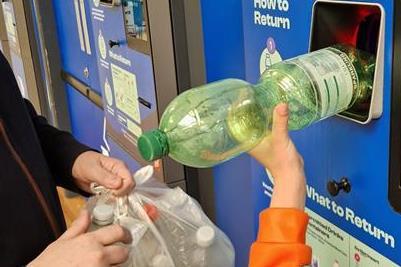
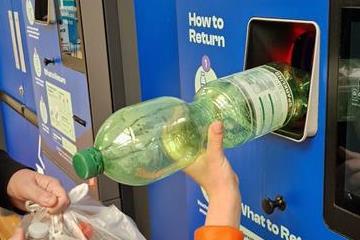
Exchange for Change, the Deposit Management Organisation (DMO) for the deposit return scheme (DRS) in England, Northern Ireland and Scotland has announced proposals for a grant for stores to help with the introduction of a reverse vending machine.
In a statement, Exchange for Change said it “recognises that some small, independent retailers will still be required to host return points, and that the upfront cost of RVMs can be a barrier.
“We are therefore developing a targeted grant scheme to support implementation. Grants will be targeted at small, independent retailers where an RVM is the most appropriate solution based on expected return volumes. Funding will be provided in addition to the Return Handling Fee (RHF).”
The proposed grant is £6,000 per site, paid over three years, structured as three annual payments of £2,000, with the first payment made approximately three months after implementation. Exchange For Change is to set aside a total of £60m to provide grants over the first three years of scheme operation.
It said that the grant is intended to support retailers with the initial capital outlay of RVM installation, improve the viability of participation for smaller retailers, and help ensure a well-distributed and effective return point network.
It also clarified some of the exemptions that will be in place for stores including an automatic exemption for retailers in urban areas with a retail space under 100m². These retailers will not be required to apply for an exemption, although they may choose to operate a return point.
Exchange For Change said it is also “exploring” the introduction of additional conditions under which other retailers will be able to apply for an exemption from operating a return point where this does not undermine local consumer access. They would factor in proximity to alternative local return points, and the ease with which a store is able to host a return point, considering criteria such as physical space and layout constraints, health, safety or hygiene risks, building or heritage restrictions, and utilities or infrastructure limitations.
It is intended that all urban retailers between 100m² and 199m² of sales area and rural retailers under 200m² of sales area would be able to apply on this ground for exemption on the basis of their physical space limitations.
The full proposed exemption policy is currently under review by regulators across England, Northern Ireland, and Scotland, with more detail expected in the coming weeks.
Association of Convenience Stores chief executive Ed Woodall praised the announcement. “It is essential that local shops are not penalised for hosting return points, so we welcome the introduction of grants for the smallest retailers and a more proportionate approach to exemptions. Retailers need clarity on the net costs of the scheme to be able to make a decision on how they take part.
“If grants and handling fees are not set at the right level, the scheme risks failing not just the retailers expected to deliver it, but the communities they serve, by undermining convenient access for consumers to recycle containers and redeem deposits.”
At the National Convenience Show on 14 April, Exchange for Change, TOMRA and Coca-Coca-Cola Europacific Partners will be taking part in a panel session to discuss the implementation of DRS. Register here for your free ticket.






No comments yet