













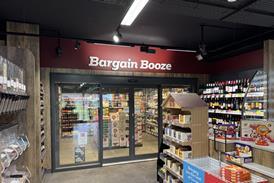






The Prime Minister has pledged to increase the maximum duration of closure orders from six months to twelve months, as part of a plan to revitalise UK high streets
Currently, Closure Orders provide certain enforcement agencies the ability to close “dodgy shops” for up to three months, and can be extended to a maximum of six months. The extension of this power to up to twelve months in total will assist enforcement in closing dodgy shops, which safeguards communities and supports the level playing field for legitimate businesses
Other measures proposed included an update to planning laws requiring every new shop selling e-cigarettes or vapes to apply to their local council for permission to open, and changing the definition of a vape shop to prevent businesses avoiding the rules by describing themselves as a convenience store.
The Chartered Trading Standards Institute (CTSI) has welcomed the Prime Minister’s proposals. A recent CTSI member survey showed almost universal support for extending the duration of Closure Orders, which addresses one of the challenges that limits their impact.
The CTSI warned that while the extension of Closure Order durations is a positive step forward, other challenges remain with their use. For example, County Councils that operate in a two-tier authority area cannot issue Closure Orders, and nor are the powers available in Scotland. In a recent CTSI members survey, just 11% of Scottish Trading Standards professionals felt that Scottish Local Authority Trading Standards services have sufficient powers to close a premises that persistently breaks the law.
John Herriman, chief executive at the CTSI, praised the decision: “CTSI welcomes the Prime Minister’s announcement on the planned extension to the maximum duration of closure orders, which will help to close down dodgy shops for longer.
“Closure orders are an important enforcement tool available to Local Authority Trading Standards teams. They can provide a more immediate safeguard for communities, and more immediate disruption to criminal activity. Today’s announcement will assist enforcement agencies in being more able to robustly disrupt the most persistent offenders.”
Herriman outlined the extent of the issue. “The presence of dodgy shops on our high streets has a significant negative impact on local communities and legitimate businesses. Local Authority Trading Standards play a vital role in maintaining the level-playing field for businesses and creating safe, prosperous communities, and today’s announcement is a positive step to assist in efforts to allow our high streets to thrive.
“We are keen to work with UK Governments to unlock the full potential of strengthened closure orders by addressing some anomalies including permitting closure orders to be accessed in Scotland, and addressing the significant challenge that remains for County Councils operating which are unable to make use of this important tool. These further changes would roll-out coverage to all Local Authorities across Britain and ensure that all local communities and High Streets can benefit from the important role Closure Orders can play in closing dodgy shops and help to rejuvenate our High Streets.”
Christopher Bell, of the Society of Chief Officers of Trading Standards in Scotland (SCOTSS), added: “Scottish Local Authority Trading Standards services are currently unable to issue Closure Orders to clamp down on persistently offending shops. We are pleased that Scottish Government are now engaging with SCOTSS and Police Scotland on this issue to explore similar solutions to empower Scottish Trading Standards Officers in dealing with criminality.”
ACS chief executive, Ed Woodall, said: “Rogue traders have been allowed to damage too many high streets for too long. Longer closure orders and stronger enforcement powers will help tackle businesses linked to organised crime and create a fairer environment for responsible local shops. Giving communities a greater say over the future of their high streets will ensure they remain vibrant, safe and relevant to the people they serve.”
Cllr Eamonn O’Brien, chair of the Local Government Association, also welcomed the announcement.
“Planning is about shaping communities, providing the right kind of economic activity and public services for the people that use them, and ensuring the right decisions are made on issues that matter to residents.
“It is positive that councils and communities will get a greater say on what shops and services are found on their high streets through these changes to the Use Class Order which will require vape shops to acquire planning permission.
“The LGA has consistently raised that some permitted development rights, which allow uses to change without planning permission, can hollow out high streets and reduce community and democratic oversight of planning decisions.
“Extra powers will help councils in revitalising high streets and shaping their communities, particularly in regulating betting and vaping shops, while also breathing new life into empty premises.”
Further reaction
Also responding to the news, Michelle Ovens CBE, CEO and founder of Small Business Britain, said: “We welcome these new measures, as high streets have always been essential to local communities and play a vital role in the UK’s small business ecosystem.
“High streets thrive when they’re shaped by the small businesses and people who know them best. Providing the support needed to keep them well-maintained, diverse and vibrant not only benefits local communities, but also helps attract additional spending from further afield. This, in turn, supports employment, strengthens local economies and supply chains, and helps preserve the culture and character that make British high streets unique.”
Meanwhile, Gillian Golden, chief executive of the Independent British Vape Trade Association, was also quick to respond: “Rogue vape traders on the high street have been a blight on the legitimate sector, so we welcome measures such as extending closure orders on dodgy shops.
“For too long the media have conflated organised criminal networks with law abiding vape businesses, when in fact these criminals just see illicit vapes as a commodity in the same way as illicit tobacco or counterfeit goods. That has damaged the public’s understanding of our sector.
“Research has shown that if even half of England’s current adult smokers were to switch to vaping, it would save the NHS £0.5 billion. Vaping will be soon be subject to excise duty, which HM Treasury estimates will bring in £0.2 billion in its first partial financial year (2026–27) and £0.6 billion per year by 2030.
“Cutting out illegal trade in vapes will be key in ensuring Vaping Products Duty contributes to the UK economy rather than reinforcing an existing illicit sector.”











No comments yet