



















Officers across England and Wales will soon be spending less time behind desks and more protecting their communities, as the Government launches PoliceAI - a new national centre dedicated to the responsible development, piloting and scaling of artificial intelligence in policing.
The centre, which is to be backed by a record £75m over three years, will work across all forces to identify, test and scale AI tools that “deliver real results,” the Government said in a release, with retail crime as one of the key focuses.
Early trials show the scale of what’s possible, from the 800 hours of footage in a kidnapping case reviewed in three hours leading to an early guilty plea, and half a million e-books worth of data translated instantly, leading to the arrest of a serious organised crime gang.
PoliceAI is part of a record £140m investment in AI technology over three years, including funding for 40 more live facial recognition units, tripling the current capacity of a technology that’s already proving its value in catching criminals.
The Government is also investing a record £16.5m to modernise how police and the public interact. This includes AI that transcribes 999 and 101 calls, links crime reports to identify patterns in demand and triages non-emergency calls to the right responder.
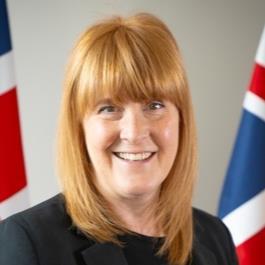
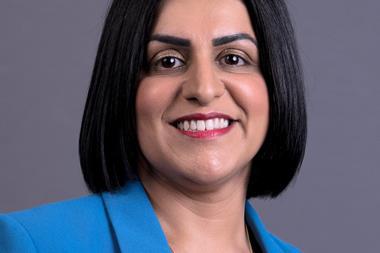
Policing Minister, Sarah Jones (left), said: “AI is already helping police catch dangerous offenders, speed up investigations and keep our communities safe - and we’re only just getting started.
“PoliceAI will transform how every force in England and Wales works, improving police access to data and intelligence, generating new evidential leads and ultimately freeing up the equivalent of 3,000 extra officers and putting more police back where they belong - in our communities.
“Tackling tool theft and retail crime is a priority. We’re investing £1m to better join up police data with property marking schemes, use AI to identify stolen goods and track resale online, and understand exactly what’s being stolen and by whom.”
In its first year, PoliceAI will prioritise areas where AI can make the biggest immediate difference. It will run large-scale pilots in up to 10 forces to help officers triage, disclose and summarise digital evidence – one of the most time-consuming parts of any investigation.
These trials will run over 2026-27 before being scaled to all police forces in 2027, freeing up millions of hours per year. It builds on work to help police adopt AI to redact audio-visual files, set to free up a million hours per year if all 43 forces use the tech we are rolling out.
PoliceAI interim director, Alex Murray OBE, added: “Crime and technology are evolving rapidly. Policing must keep pace by adopting AI responsibly to catch criminals and keep people safe.
“We’ve created a national AI centre to help policing work smarter – our job is to get responsible AI into the hands of officers and staff so that they can spend less time on bureaucracy and more time fighting crime and helping the victims, witnesses and communities they work so hard to protect.”
PoliceAI is set to become part of the planned National Policing Service and will publish a public registry of AI tools in use across policing, developed in partnership with CENTRIC at Sheffield Hallam University. An initial version will be available by the autumn.
AI models will be independently tested for accuracy and bias, building on the government-funded rigorous approach already established for live facial recognition algorithms. This is vital in areas like evidence translation where documents must be translated accurately to stand up in court.
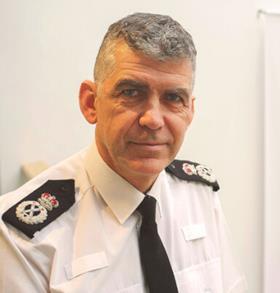
Sir Andy Marsh (right), CEO of the College of Policing, also commented: “The collge is proud to host PoliceAI, an emerging technology that we’re committed to explaining clearly - how it works, how it’s evaluated and the safeguards in place to build public confidence in its use.
“The launch forms a central part of the Police Reform white paper, published in January 2026, which set out the most ambitious redesign of policing in nearly 200 years.
“It directly supports the government’s Plan for Change and Safer Streets mission - putting more visible, effective policing at the heart of every community. We have already put 3,000 more neighbourhood officers on our street, where the public rightly expect them to be - out in local areas, fighting local crime. 13,000 new neighbourhood officers will be in place by the end of this Parliament.”









No comments yet