











Growing sales in a store that needs support can result in huge growth, but what happens when the store is already at the top of its game? Can improvements be make on a core category like snacking?
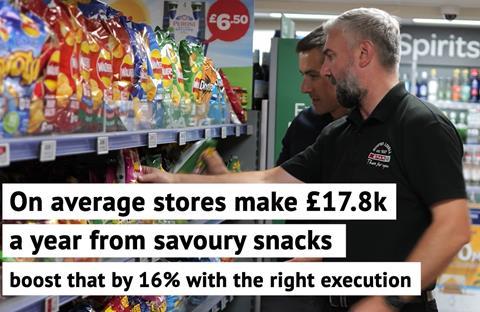
Never one to shy away from a challenge, Pepsico’s category management controller Simon Foster got in touch with Ian Lewis, owner of Spar Minster Lovell in Oxfordshire to see how he could help make a great store even better when it came to snacking sales.
The trial began earlier this summer and utilised advice from Pepsico’s Max Your Snacks guide. Catching up with them when the trial completed, Convenience Store learned what changed and how it impacted snacks sales at Spar Minster Lovell.
Firstly, Foster explained why they chose Ian’s store. “We can go and drive standards in a very poor performing store to drive a big percentage uplift. But the interesting question is can we do that in a more disciplined store as well where the standards are high. It helps highlight that you know any retailer can benefit from some of the advice and the guidance that we can give.”
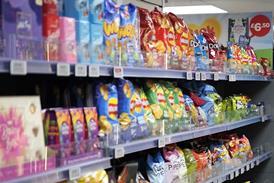
Keen to see the state of play before the trial, Foster turned his scrutiny onto Ian’s snacking range to see how it was performing. “For Ian, the big key here was around the range and the main fixture space itself,” he explained. “So, one of the first things we wanted to look at was range complexity and when we processed all the data, we found that 45% of Ian’s range was driving 80% of the sales.
“This means there’s a ‘flabby tail’ that is a mixture of niche offerings that can offer something to a local audience, but also some duplicative, poor performing products that you could get rid of and enable stronger sales overall by spacing out on better sellers.”
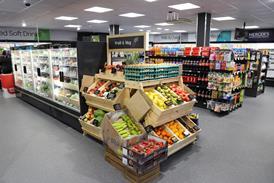
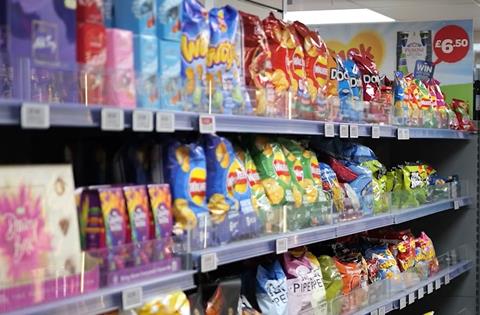
As well as analysing Ian, his fixture was also assessed, as Forster explains that even the most disciplined store can make improvements. “The second part of it was reorganising the fixtures a little bit just to gather some clarity. What tends to happen over time is that an impulse category like snacks is great because lots of new products comes out all the time. However, that can be a challenge in the sense of trying to find space for other line and still make that fixture logical and easy for a shopper to access.”
In these cash-conscious times, price-marked packs play a growing role in convenience stores. Foster highlights how important it is in the snacks category. “Customers see that pricemark on pack and they feel reassured that they’re getting value through the purchase. We’ve seen PMPs grow in popularity over the last few years and if you look at overall symbols and independent stores as a total read, pricemark packs make up about 63% of all category sales which is up a couple of percentage points versus last year.
“It’s definitely growing in popularity and I think from a PepsiCo point of view, we’ve pushed more and more into that format on a number of our packs, particularly on our Walkers core brand to help retailers feed into that.”
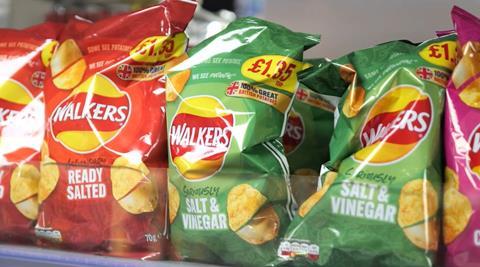
Ian agrees that PMPs provide certainty for customers and retailers. “The conversations we have with customers on pricemark packs – they just reassure people. And from a retailer point of view, there isn’t the fluctuation in promotion. Sometimes you know when a product is on promotion and it’s a pound, that’s great, but then all of a sudden it goes back to £3.50 and you know you’re not going to sell that. I’d rather have a pricemark pack and everyone knows where they stand.”
With all of these changes in mind, how did it impact sales at Spar Minster Lovell?
“In terms of sales, what we saw was around a 2% increase in category RSV growth versus the period before we first came into store. While that doesn’t seem like a massive amount and massive percentage uplift, but when you take into account that Ian is in a very disciplined store, and he activates secondary space really well plus he takes advantage of seasonal events really well, it feels like a real win.”
Foster adds that as well as the sales uplift, Ian’s team can manage the category more efficiently with the revised range and fixture layout. “We definitely had a conversation around the efficiency of the storeroom and the amount of times staff have to touch the fixture. At a time when Ian’s resources are diminished when compared to the first time I came to the store - being able to achieve that growth off of a more efficient basis is a huge positive.”
For retailers who may be overwhelmed by their snacking fixture and not know where to start, Foster has some simple advice. “Range is the first port of call. Sorting that out gives you the flexibility and space to do other things. And I think you also then see a very immediate impact in terms of cash flow and efficiency.”
“If you’re stocking the best sellers, give them the right space in store and you’re going to capture the majority of the right shoppers that you want to capture.”
Once there’s room to move lines around, then it’s time to home in on what works in your store. “Make sure that you’re covering the key missions and need states that are covered in the Max Your Snacks report. Then it’s a case of structuring the main fixture in a way that makes sense for your shoppers.”
Once the primary fixture is sorted, it then comes down to the role of secondary site. “We know that almost 60% of purchases in this category are made on impulse. So yes, the main fixture is really important and in a smaller store it makes up three-quarters of all category sales. However, the 25% that is from other parts of the store are incremental sales.
“So, it’s vital to have those secondary sites in good positions, near adjacent categories like alcohol or lunchtime lines and getting the shopper to think about picking up an additional item.”
While Ian’s store benefitted from the changes made, he encouraged his fellow retailers to seek out support where possible to see similar growth.
“I encourage all retailers to embrace this sort of exercise. Retailers don’t like being told what to do - they think that their shop is the best and I get that. But suppliers do know what they’re talking about with in terms of planograms and category advice.
This could have ended up in disaster but you’ve got to get out of your comfort zone a little bit, because with costs rising, you cannot sit still. You have to be proactive and try to embrace any little bit of help you can get.”
For more on Max Your Snacks, download the guide now via *shopt and get started: https://www.shopt.digital/gb/pepsico_max_your_snacks_lp






No comments yet