












Consumer research from Coca-Cola Europacific Partners and TOMRA reveals how convenience retailers can get ahead of the UK’s deposit return scheme, build shopper loyalty and turn bottle returns into basket spend.
Convenience retailers could be forgiven for prioritising administrative and infrastructure requirements ahead of the arrival of the UK’s new deposit return scheme (DRS). Yet a little over 12 months out from the scheme’s launch in October 2027, experts say it pays to start thinking now about how to deliver the best possible customer experience.
Consumer research from Coca-Cola Europacific Partners (CCEP) and TOMRA provides some key pointers for how c-store owners can exceed shopper expectations once DRS goes live across England, Scotland and Northern Ireland.
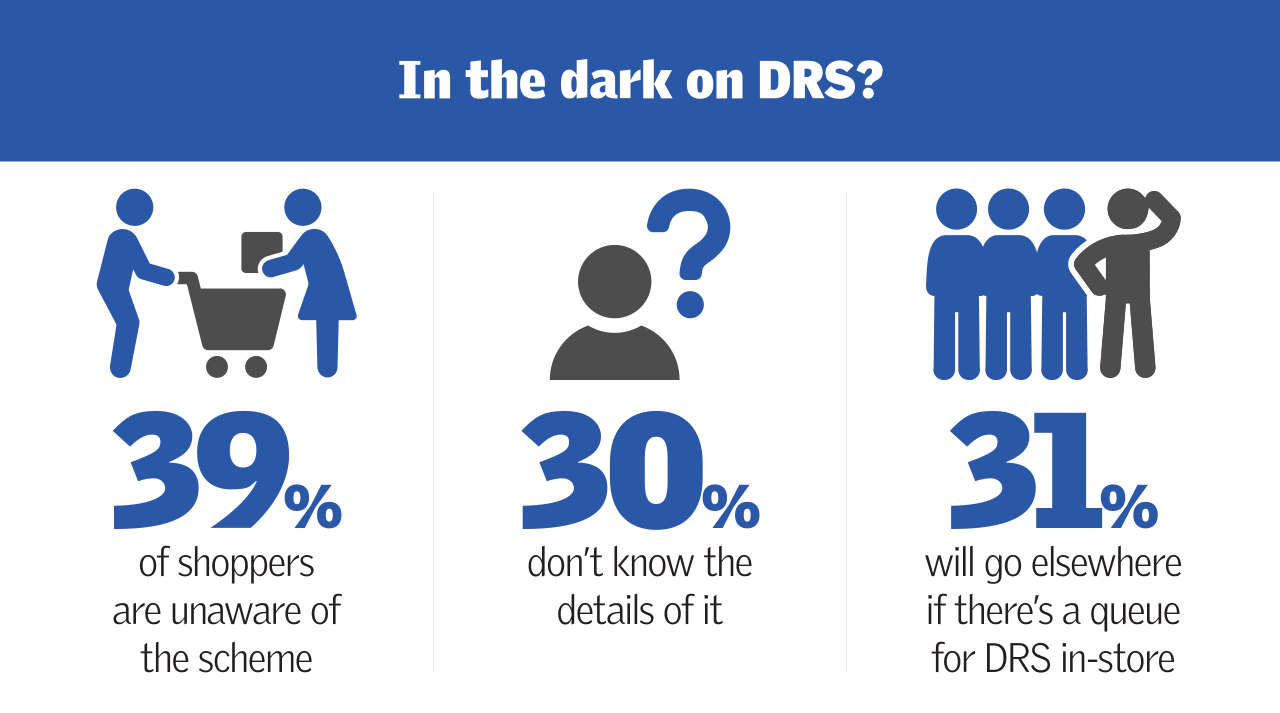
New research carried out this year by CCEP finds that while over half of consumers are aware of DRS, 30% don’t yet know the details while 39% are unaware of the scheme altogether. This presents a big opportunity for c-stores to communicate early and clearly about what DRS is and how it will work, in order to shape customer expectations.
Samantha Walker, DRS project lead for CCEP, has some key advice for how retailers can communicate DRS to customers by deploying their most valuable asset – their staff. “Make sure your store staff are aware of DRS and understand it,” Walker says. “Particularly where you’ve got a lot of face-to-face interactions, encouraging store staff to tell the story of DRS and educate shoppers as they come in is going to be really important.”
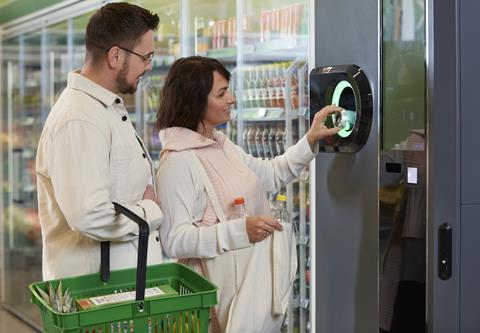
In-store signage will also play an important role, according to Sondre Henningsgård, UK managing director for TOMRA Collection UK. “Shoppers will adapt to the new system, but they will need clear answers to their questions: Can I return this container? How does the machine work? And how do I receive my refund?” Henningsgård notes.
The good news is that shoppers are approaching DRS positively, with 75% rating the idea as excellent, very good or good, and with good recycling habits already ingrained among a large majority: 89% of those surveyed by CCEP say they usually recycle plastic, suggesting shoppers are primed to engage with the scheme so long as the returns process is simple.
“There’s a real opportunity to be the community partner to your shoppers by operating that local return point”
– Samantha Walker, DRS project lead for CCEP
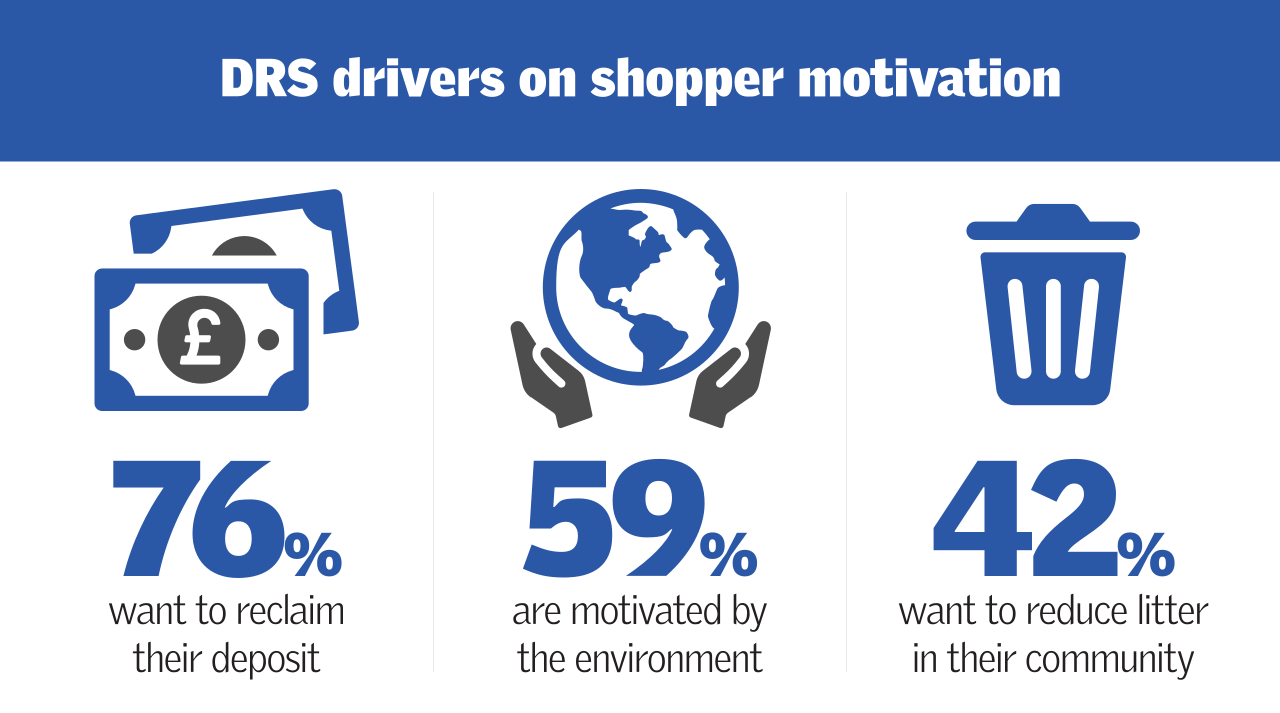
TOMRA research from 2022 based on consumer engagement with deposit return schemes in Europe finds that while the main motivation to recycle is to reclaim the deposit (76%), people are also heavily motivated by consideration for the environment (59%), keeping their home tidy (44%), and reducing litter in the community (42%).
C-stores should lean into the goodwill that already exists around DRS, and shoppers’ pride in place, and use it to their advantage. “There’s a real opportunity to be the community partner to your shoppers by operating that local return point,” says Walker. “It helps people fulfill something they genuinely want to do to support their local community.”
There may also be opportunities to engage shoppers in DRS through community initiatives such as charitable donations. “Retailers should view DRS not just as a compliance requirement, but also as an opportunity to increase footfall and strengthen customer loyalty,” says Henningsgård.
Once shoppers have visited a store with the intention of returning their bottles, convenience retailers need to make the customer experience as smooth as possible in order to maximise dwell time and spend, with 70% of shoppers saying they are more likely to buy from a brand that makes DRS easier or clearer, according to CCEP.
Walker says one of the big barriers store managers will need to overcome from day one will be communicating the products on which the deposit is applicable, particularly during the transation period, where stores are carrying a mixture of new DRS products and non-DRS eligible drinks. Shelf-edge labelling that makes clear whether the 20p deposit has been applied to the price of the product and building awareness of the Exchange for Change logo on eligible products “is going to be really important”, she says, with CCEP research showing a majority of shoppers favour the price and deposit being shown separately.
Walker also advises that convenience retailers make plans to rationalise their drinks range down to their best sellers in order to rotate stock as quickly as possible and minimise the period when some drinks containers are subject to DRS and others are exempt because they were placed on the market prior to the scheme’s launch. She adds that retailers should maximise the opportunity to convert the refund into a sale by locating enticing offers near the reverse vending machine (RVM) and on the journey from the return point to the till.
Henningsgård suggests retailers that offer a smooth customer experience stand to benefit financially from DRS. “What we consistently see is that the majority of shoppers (9/10) choose to spend their deposit refund in the same store, and because returning containers is often a planned trip, these customers tend to have a larger basket than average. That creates a real opportunity for incremental sales,” he says.
“Ultimately, shoppers will judge DRS not by the legislation itself, but by the experience they have when returning their containers”
– Sondre Henningsgård, UK managing director, TOMRA Collection UK
Shoppers surveyed by CCEP indicate a willingness to store bottles at home and return them during a routine local top-up shop rather than always making a special trip, providing further encouragement that convenience retailers stand to benefit from hosting a return point. The most popular frequency for returning bottles is 1-2 times per month, according to TOMRA, with shoppers returning an average of 11-29 bottles at each visit.
But retailers should beware the risk from delivering a poor experience: around a third (31%) of respondents say they would go to another store to return their bottles and cans if there is a long queue or downtime at the RVM.
“Ultimately, shoppers will judge DRS not by the legislation itself, but by the experience they have when returning their containers,” says Henningsgård. “Retailers who make that experience simple, reliable and convenient will be best placed to earn customer loyalty and capture the benefits that DRS can bring.”









No comments yet